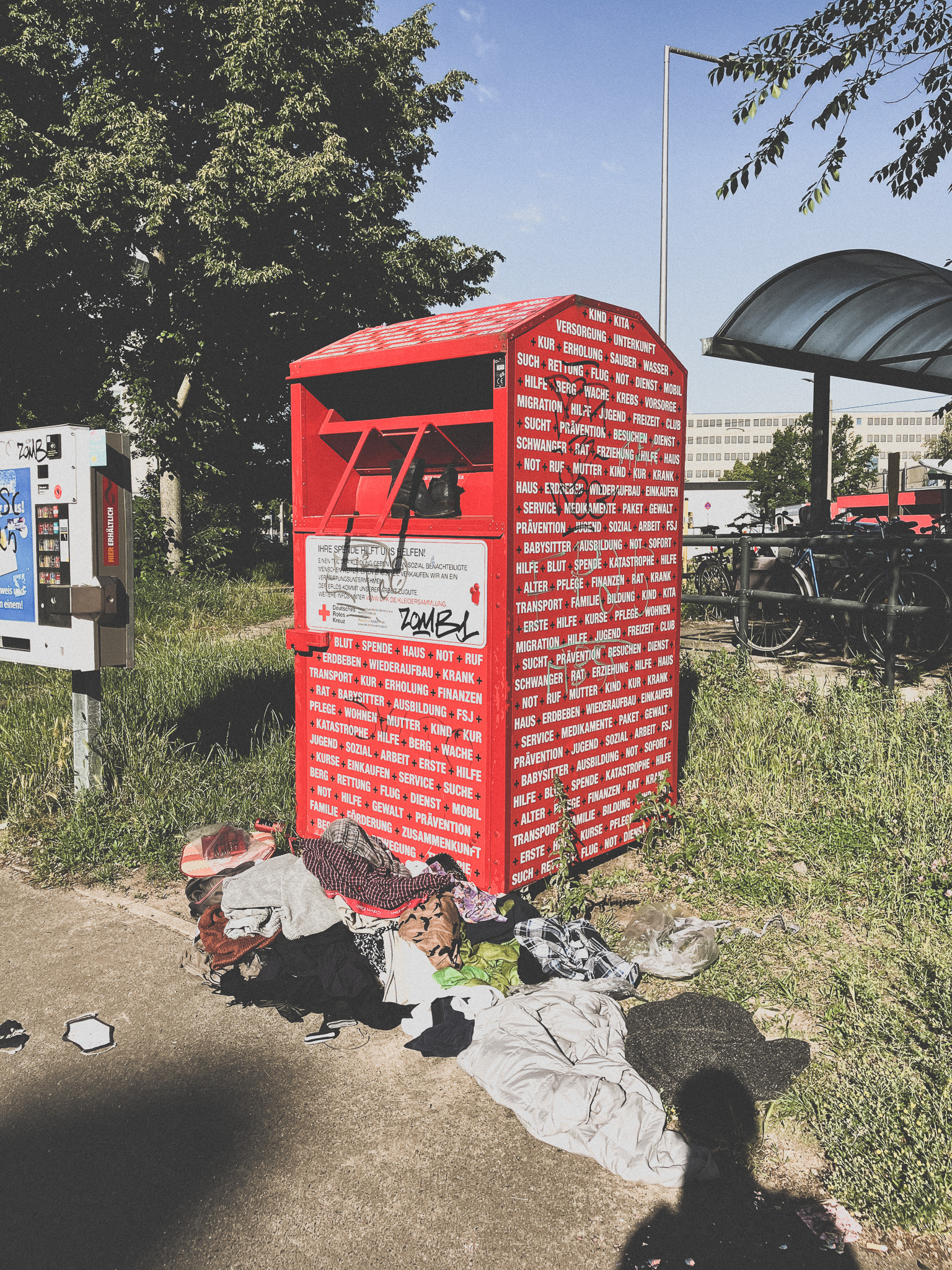
The fast-fashion system has dramatically shortened clothing lifecycles, leading to massive textile waste. In 2020, the European Union generated 6.95 million tonnes of textile waste, yet only a small portion was collected for reuse or recycling. Much of the Global North’s donated clothing is exported to Accra, where markets like Kantamanto Market receive around 100 containers per week—only about 20% is resellable, and the rest becomes waste.
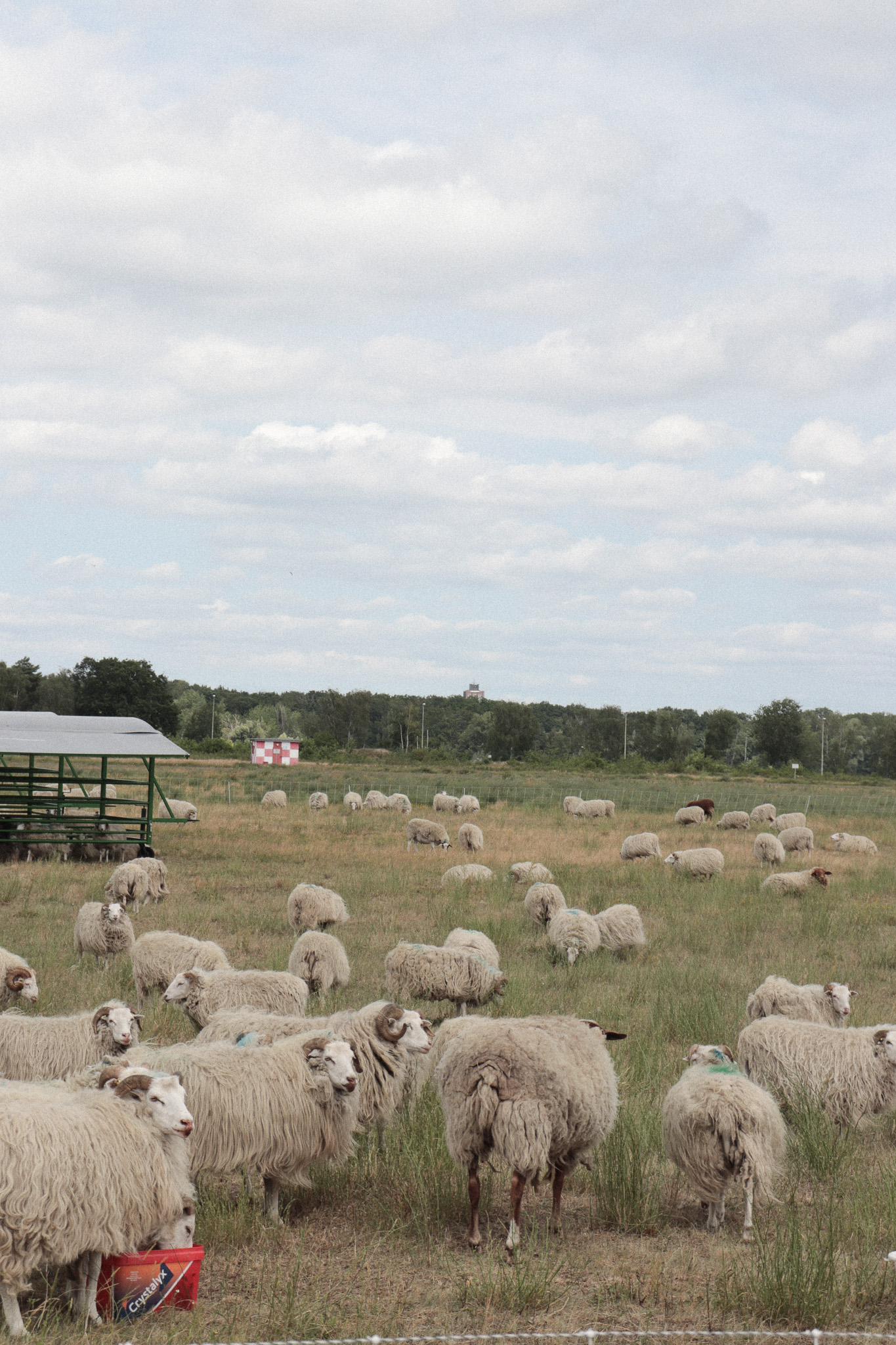
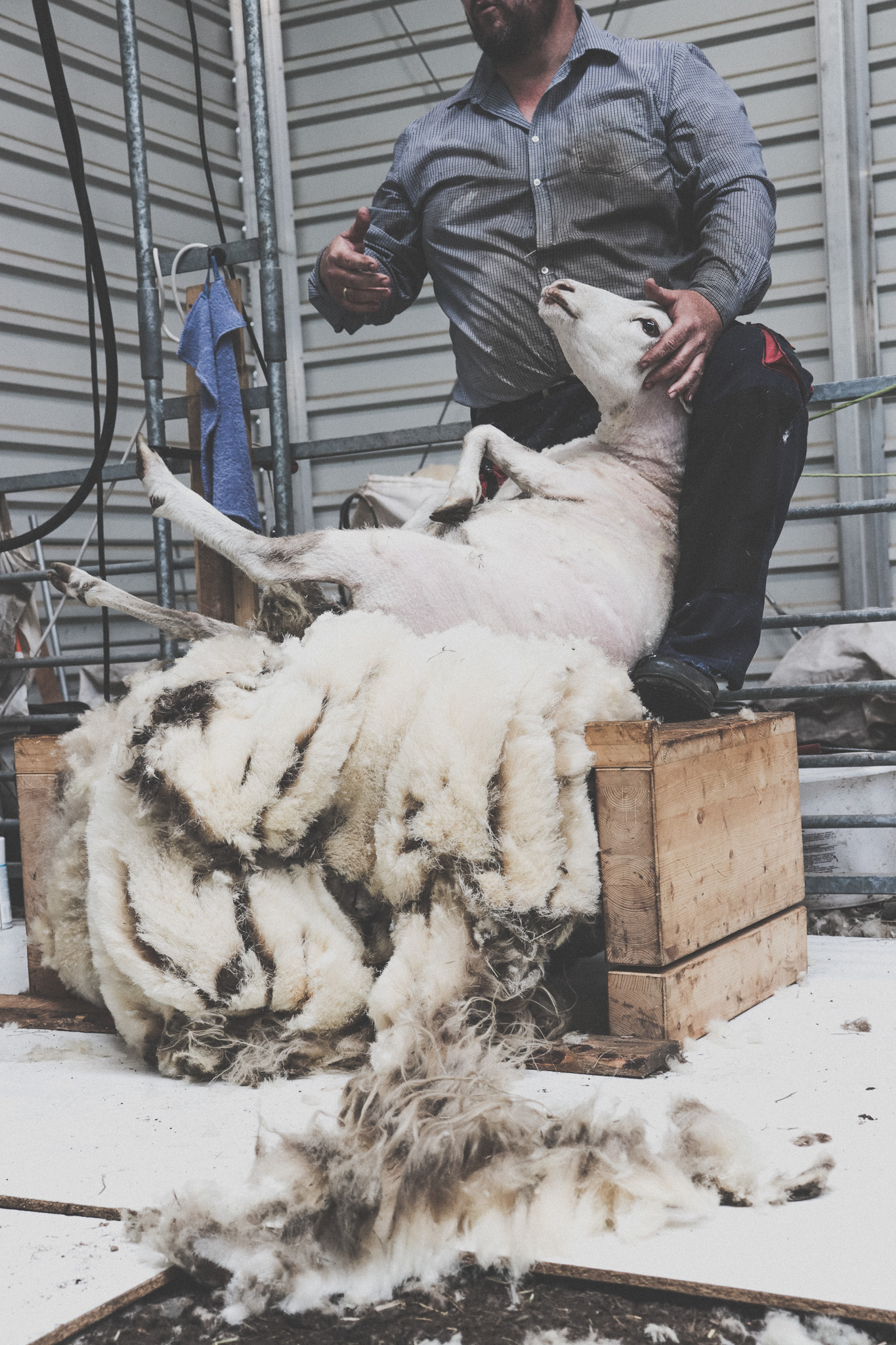
In Brandenburg, up to 300 tons of wool are produced each year, yet most is burned or discarded. Across Europe, around 90% of sheep wool is not used. Due to cheap merino imports from Australia and New Zealand, local coarse wool is no longer economically viable. As shearing remains necessary for animal welfare, wool becomes a byproduct—often composted or incinerated despite its material potential.
In Berlin, sheep are used in public parks for ecological landscape management. In an interview conducted by the Greenlab team from Weißensee Kunsthochschule, which I also attended, Frank Wesam (Schäfer von Grün Berlin) explained that grazing at Tempelhofer Feld helps maintain suitable habitats for the skylark, whose needs cannot be met by mowing alone. In other areas, sheep replace mowing to support biodiversity while protecting insects and soil. He also noted that large-scale wool-processing infrastructure has nearly disappeared in Germany. Most wool must be sent abroad for processing, while small regional initiatives exist but operate at very limited capacity.
The domestication of sheep began in north-east Iraq from around 8000 B.C.25 Since then, wool has been utilised across cultures for centuries, primarily for textiles and rugs, due to its remarkable natural properties. The most typical dwelling of the nomadic tribes on the Mongolian plateau, the Mongolian yurt, appeared in the 15th century BC. Felt’s low thermal inertia affected the indoor temperature stability, resulting in a large difference between day and night temperatures inside the yurt. 26 Also wool’s durability has made it a preferred material for rugs, as seen in the longstanding tradition of wool- based Persian carpets.
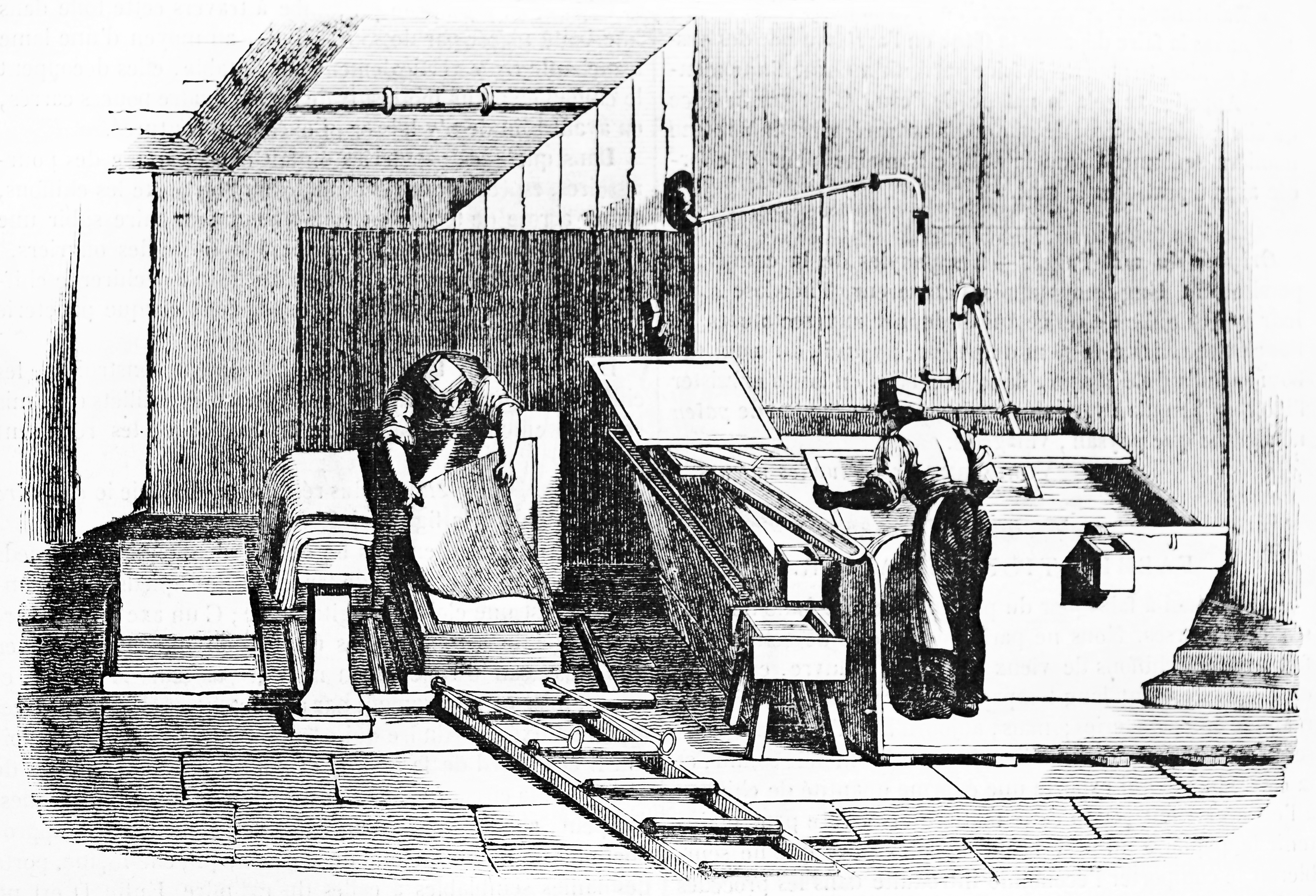
Before the rise of wood pulp in the 19th century, European paper was primarily made from discarded textiles such as cotton, hemp, and linen. Rag pickers collected old clothing, which mills sorted, cleaned, fermented, and beat into pulp. Although fabric-based papermaking may seem unusual today, it reflects the material origins of paper: a process of transforming worn textiles into new value. This historical practice highlights a circular mindset that resonates strongly with contemporary sustainable design principles.
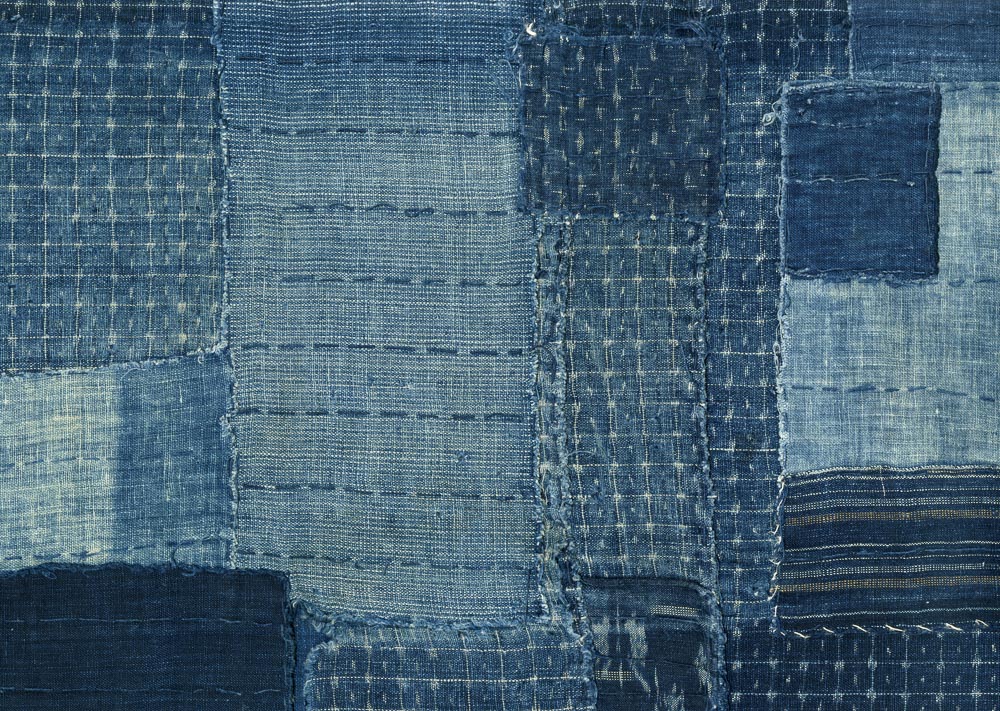
What counts as waste has always depended on social values. Before industrialization, rags were not trash but vital resources within circular systems. Practices such as Japanese boro—patched and layered garments preserved over generations—and Korean bojagi, cloths sewn from fabric scraps, demonstrate how scarcity fostered cultures of repair, care, and material respect. Rags carried memory, labor, and value. Industrialization disrupted this cycle, replacing repair and reuse with linear production and disposal. Yet revisiting rag-based practices reveals an alternative mindset—one that preserves the “thing-ness” of materials and reimagines waste as resource.
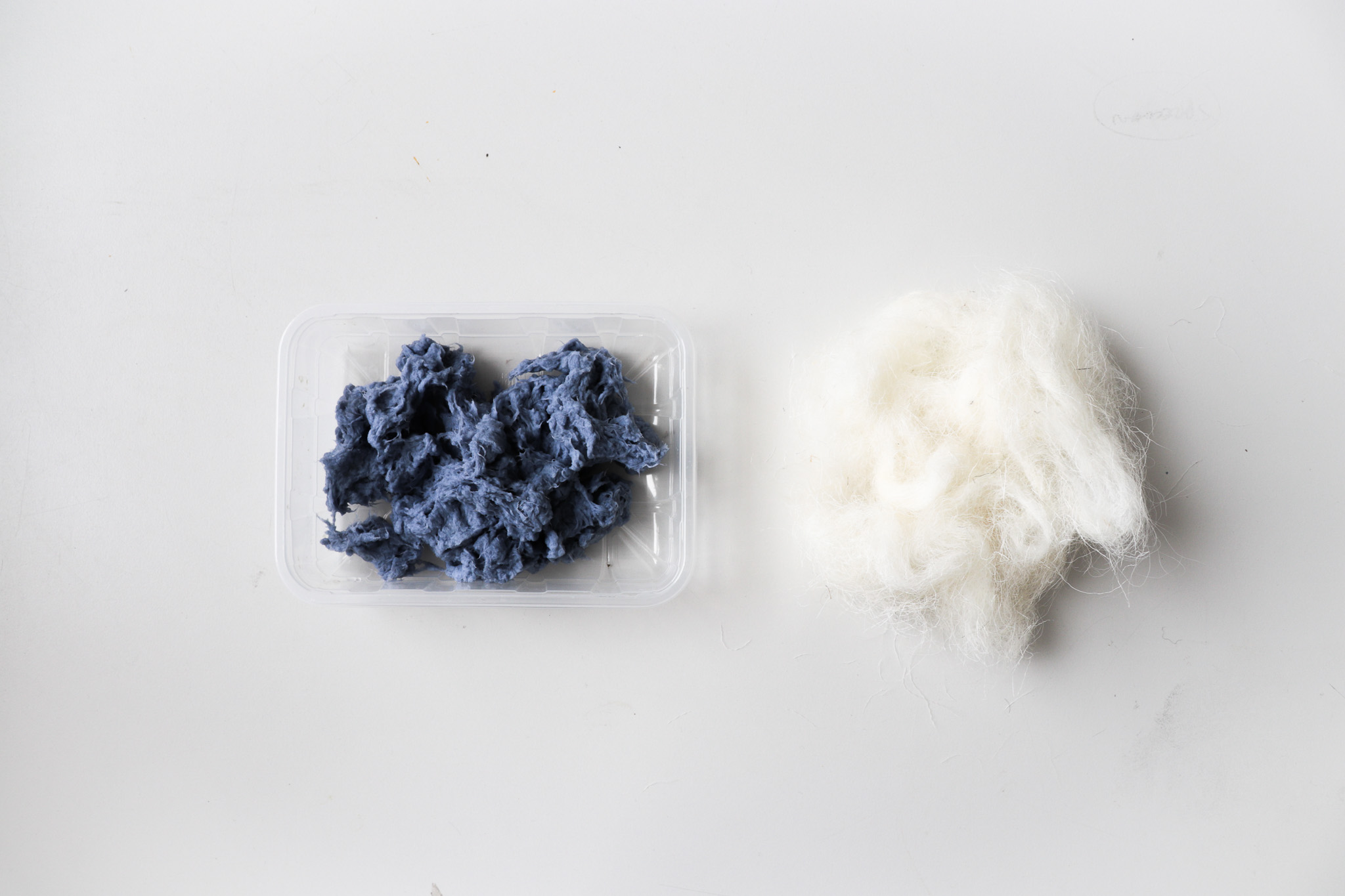
The primary materials for this project were sourced from Textilhafen, a Berlin-based organization that collects and sorts donated clothing. The garments were sorted by color, cut into small pieces, boiled to clean and soften the fibers, and then processed in a blender to control fiber breakdown and texture. Additionally, wool fleece from urban sheep in Berlin was cleaned to remove dirt and lanolin, then carded to align and refine the fibers for blending.

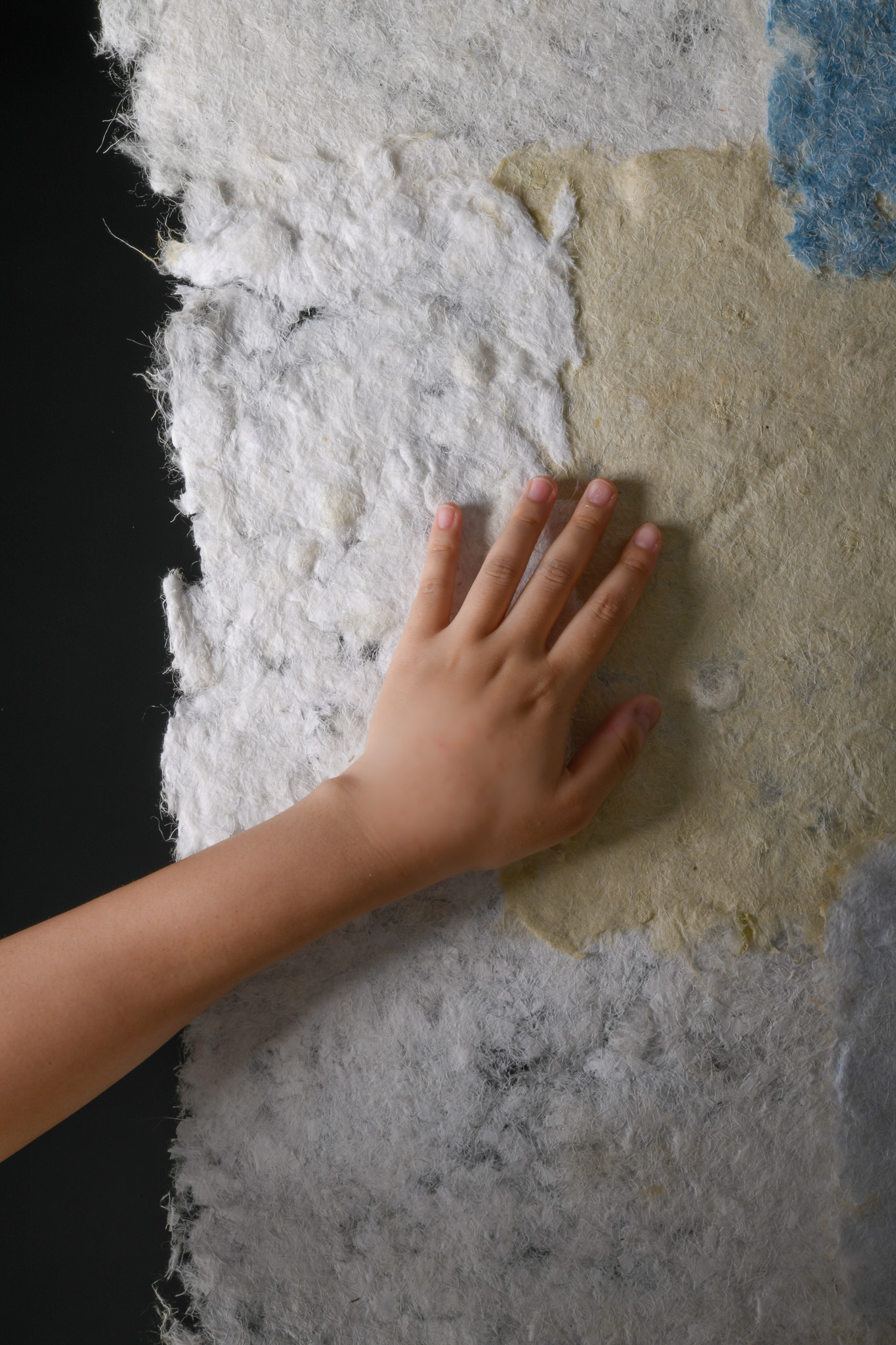
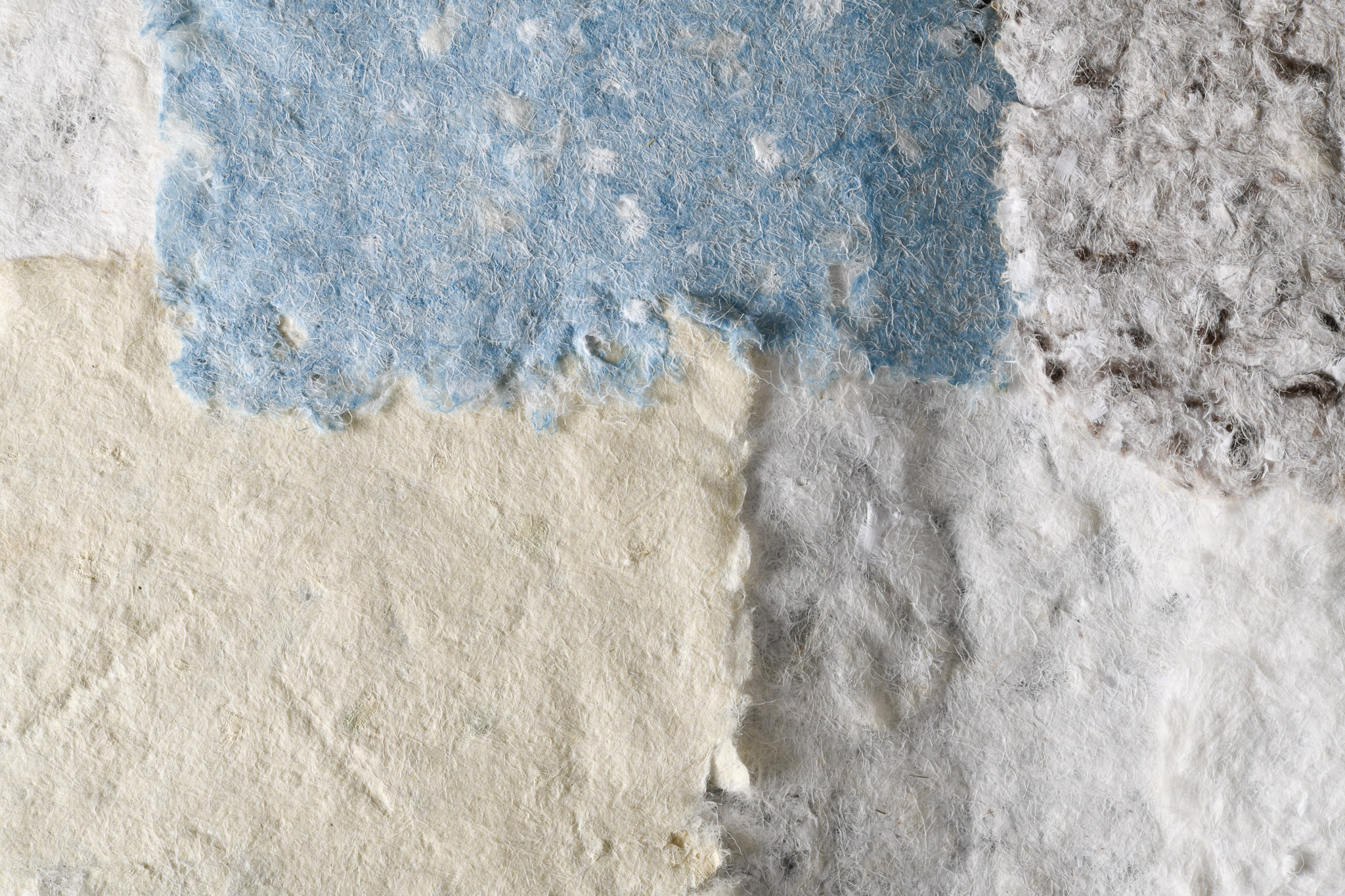
The pre-processed textiles and wool fibers are carefully combined and dispersed in water to create a pulp mixture. This slurry is then transferred onto a custom-made papermaking frame, where it is evenly spread and shaped into sheets following the traditional papermaking process. Through this method, the fibers naturally bond as the water is drained, forming a cohesive, flexible sheet that integrates the unique properties of both textile and wool materials.
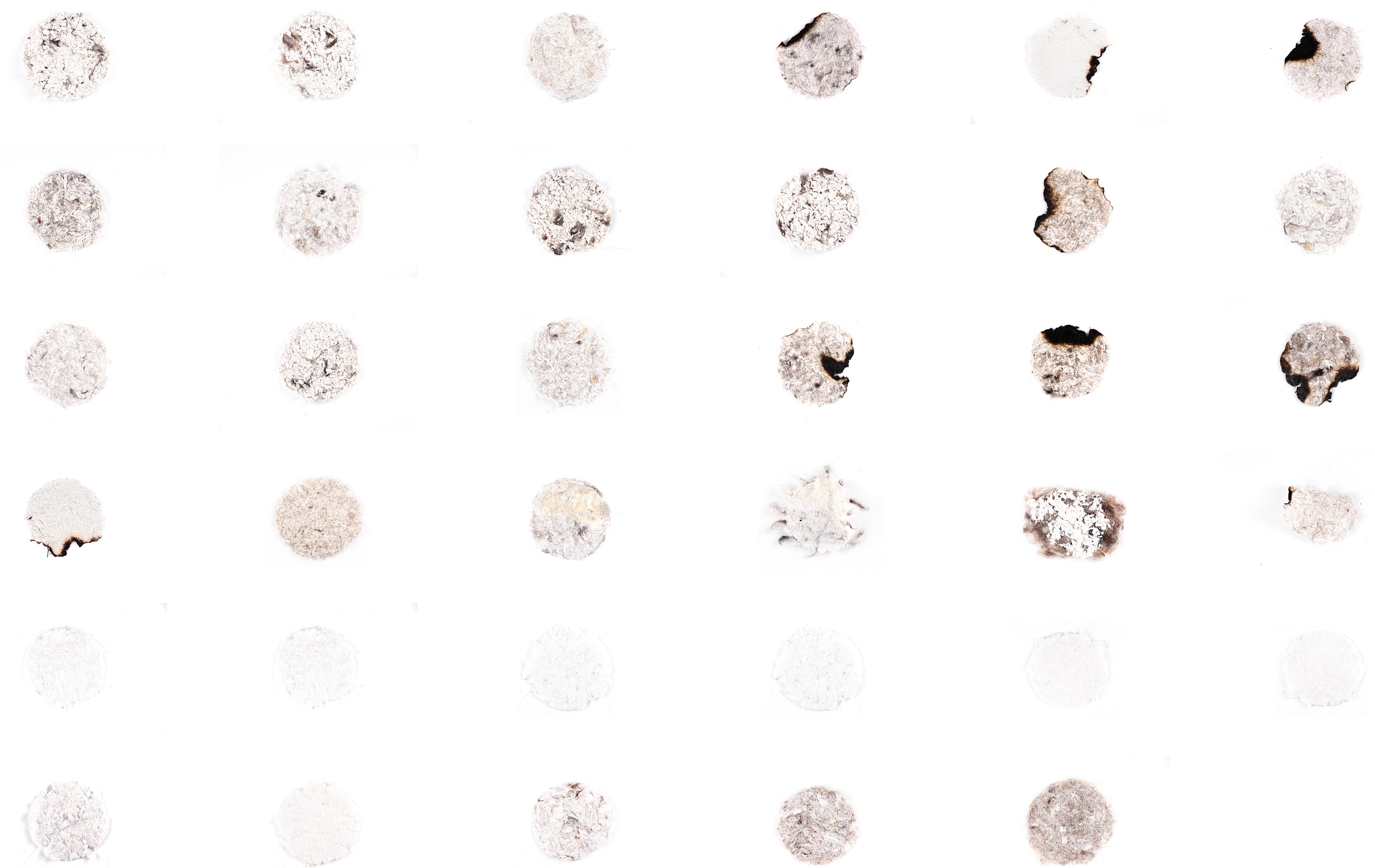
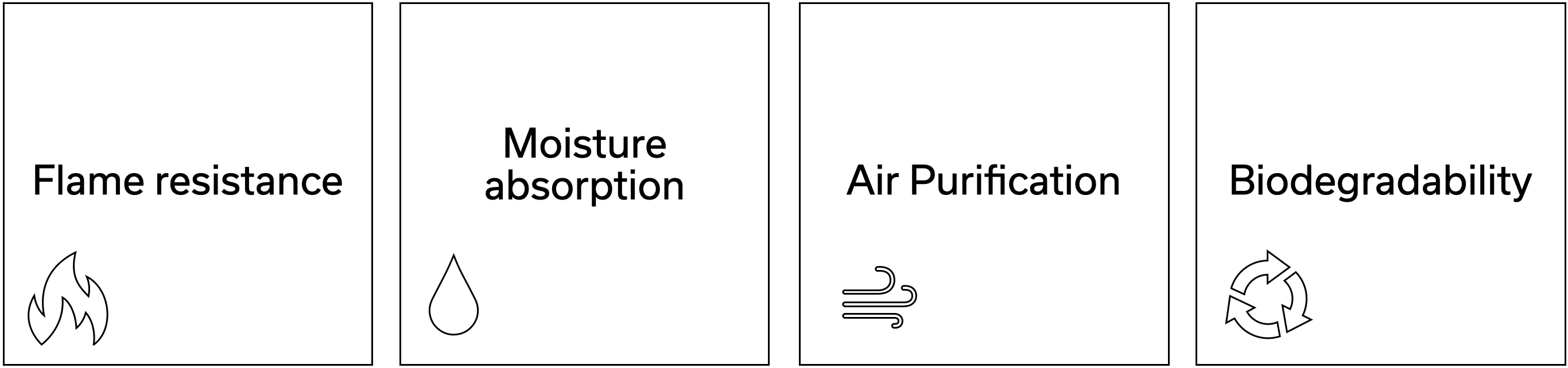
The wool–textile composite was developed through material experiments testing different blending ratios of processed wool and textile pulp. These trials evaluated texture, flexibility, structural strength, flame retardancy, and moisture absorption, ensuring that wool’s functional properties were retained. Variations in fiber fineness also allowed control over surface texture and tactility. Several natural surface treatments were explored. Konjac glue proved most suitable—traditionally used in Japan to strengthen washi paper, it enhances durability while preserving flexibility and flame resistance.
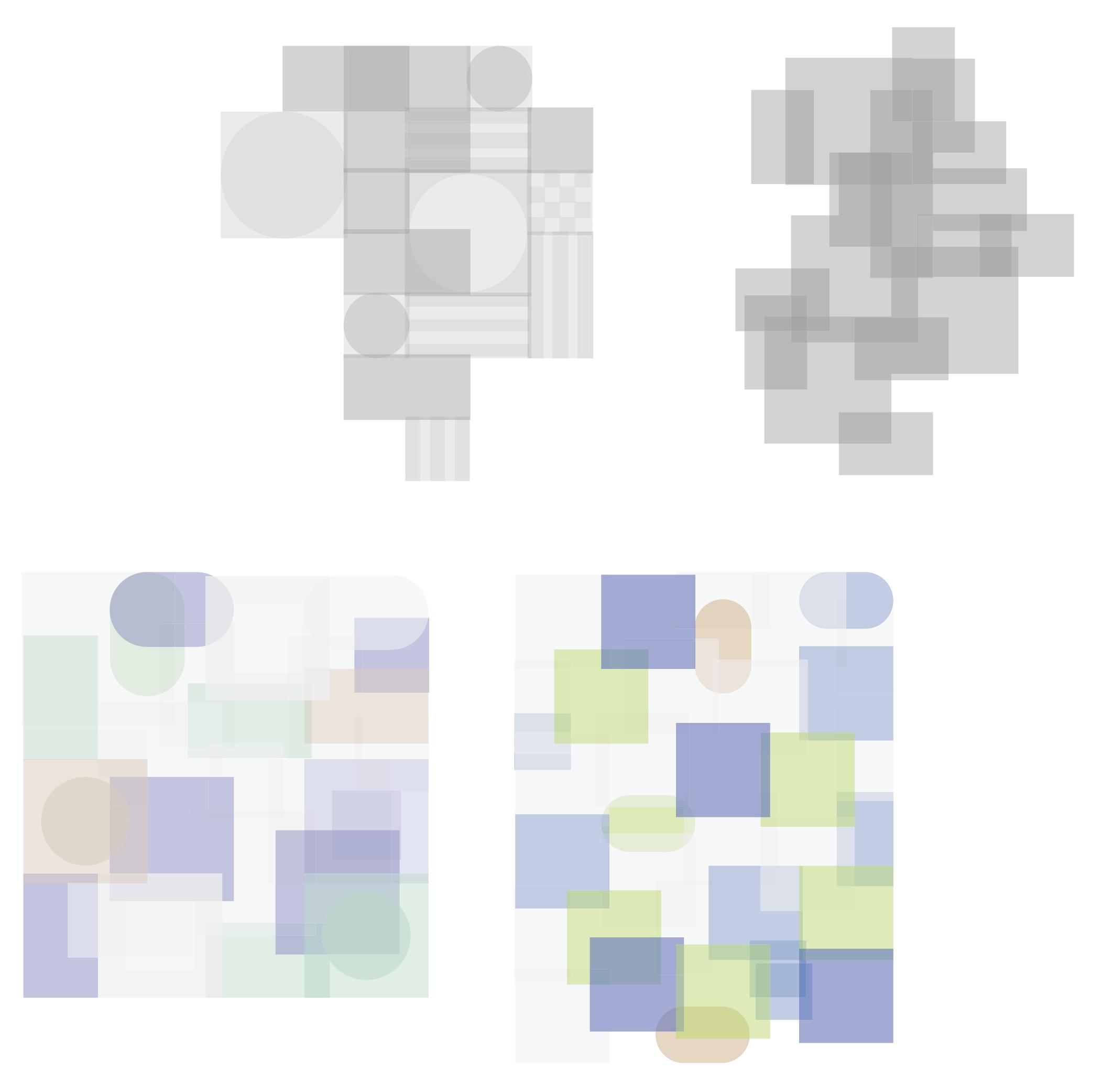
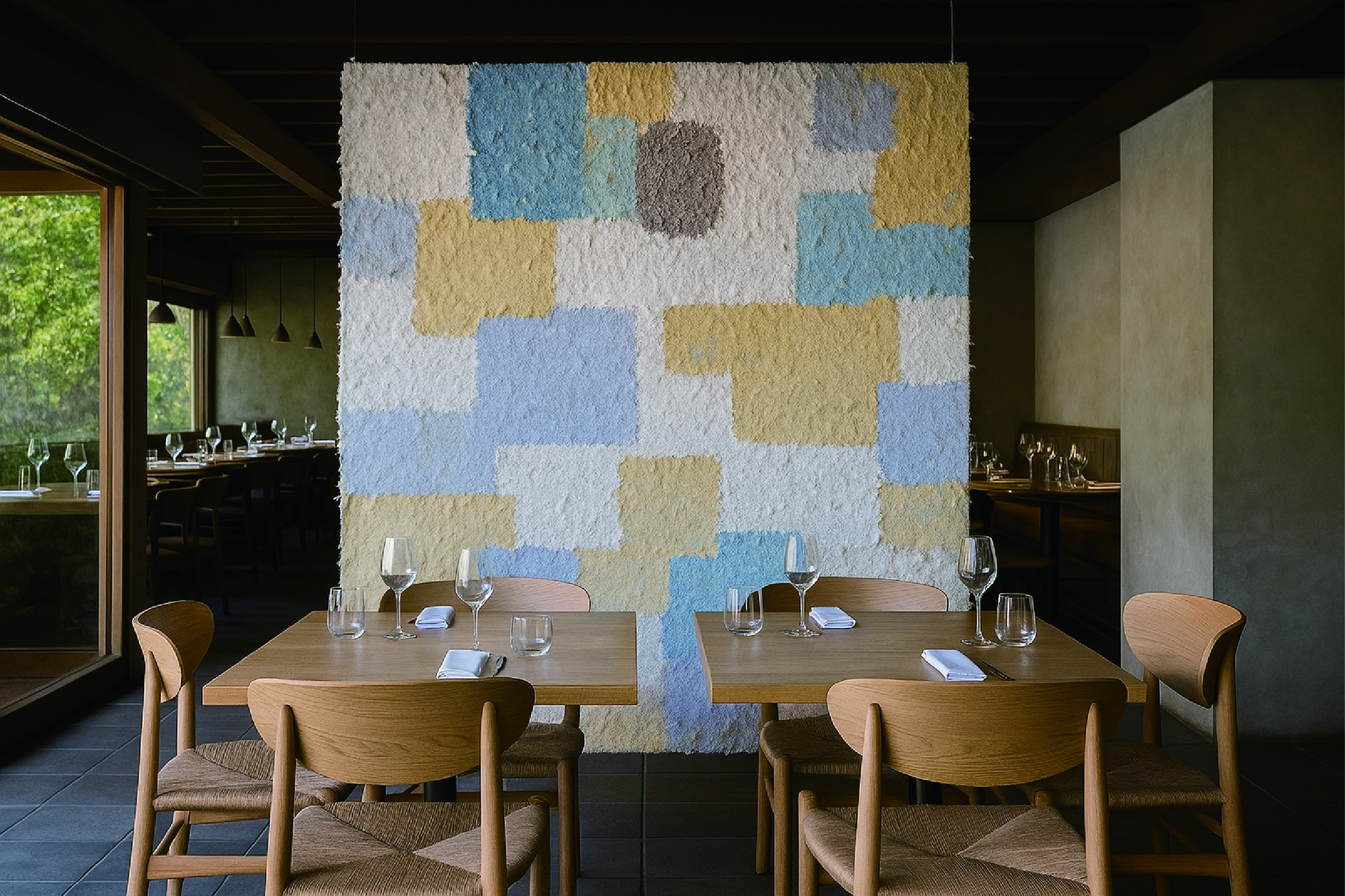
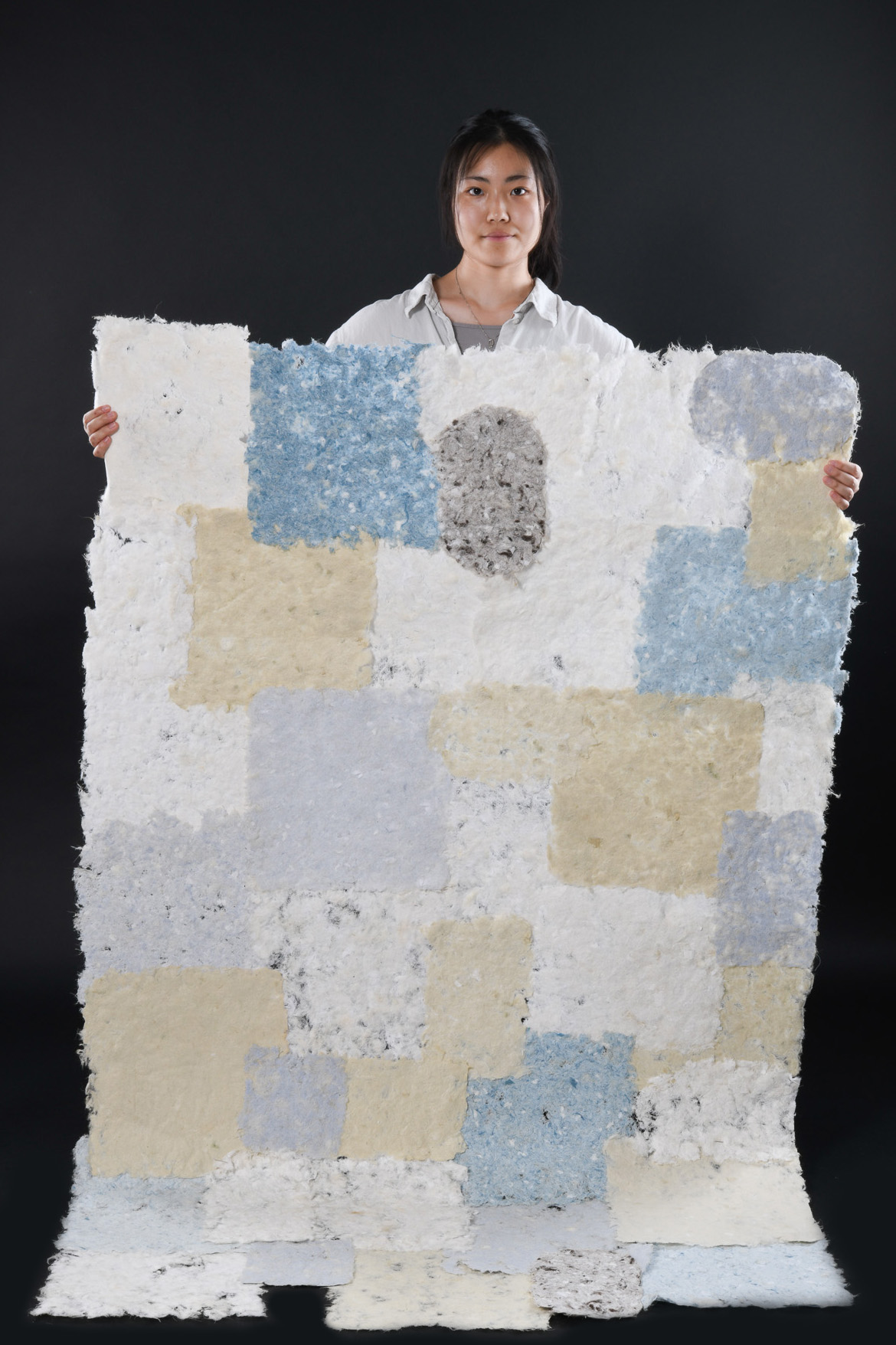
Inspired by the Japanese practice of boro, this project embraces visible mending and layered repair. The material is composed of recycled textile fragments in a patchwork structure, allowing wear and intervention to become part of its aesthetic. Designed for ongoing repair, new pieces can be added over time, extending its lifespan. In doing so, the project challenges throwaway culture and promotes a more caring, participatory relationship with materials.